ELEMENTRAC CHS-r: Carbon / Hydrogen / Sulphur Analyser
Brand: Eltra | Category: Scientific & Laboratory Equipment
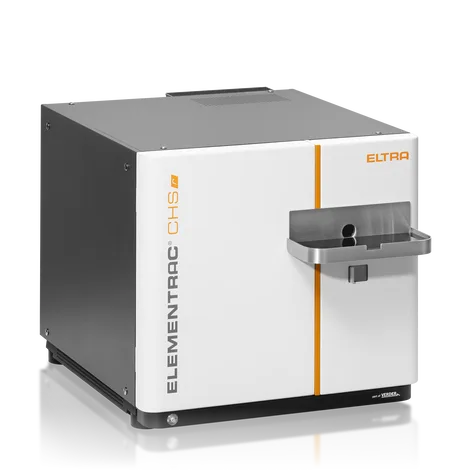
Horizontal resistance furnace analyser measuring carbon, hydrogen and sulphur simultaneously in organic samples, to DIN, EN and ISO methods. Ceramic boats allow a high sample weight, which matters for heterogeneous material such as coal, coke and biomass where a small aliquot would not be representative.
Selected manufacturer specifications
| Parameter | Value |
|---|---|
| Typical analysis time | 60 - 180 s |
| Power requirements | 230 V, 50/60 Hz ; max. heat up current 2000 W |
| Dimensions (W x H x D) | 58 x 52 x 75 cm |
| Weight | ~ 77 kg |
Selected values from the manufacturer’s technical data for this product or explicitly named model variants. Measurement performance depends on the sample and configuration. Confirm the current model, utilities, accessories and acceptance criteria in the quotation. Checked 2026-09-29.
Confirm your configuration
Share the details you know so we can prepare a comparable, itemised offer.
- Sample material, dimensions/quantity and required preparation or analysis result
- Measuring/working range, repeatability requirements and compatible accessories
- Utilities, calibration/reference materials, software and service scope
Get a Quote
Request an itemised quotation covering the proposed configuration, availability, lead time and agreed supply and support scope.
Useful details to share
- Intended application, process or teaching activity
- Required capability and equipment it must work with
Share what you know. You can start with your name and a phone number or email; final specifications can follow.
Not sure which configuration you need? Help me choose
Contact Vvon Technologies Limited about Eltra equipment requirements in Bangladesh.
Phone: +8801805987890 | Email: info@vvon.com.bd
Back to Scientific & Laboratory Equipment
More from Laboratory Instruments
- CHS-580A: Carbon / Hydrogen / Sulphur Analyser
Vertical furnace analyser for simultaneous carbon, hydrogen and sulphur determination in organic samples, configurable for single element or multi-element operation. As with the CS-580A it uses ceramic crucibles and an autoloader, and covers total organic and total inorganic carbon.
- CS-580A: Carbon / Sulphur Analyser
Vertical resistance furnace analyser for simultaneous carbon and sulphur determination in organic samples, and for total organic and total inorganic carbon. It can be configured for a single element or for both, and an autoloader with 36 or 130 crucible positions is required for unattended running.
- CW-800: Carbon Dioxide / Water Analyser
Analyser that determines carbon dioxide and water content simultaneously in materials such as cement and gypsum. A quartz tube resistance furnace runs at a fixed temperature up to 1000 degrees Celsius under nitrogen, and the released gases are measured by infrared absorption through a gold path, so no halogen trap is needed.