SDHS-060 Hot DI Generator
Brand: Semian | Category: Nanotechnology
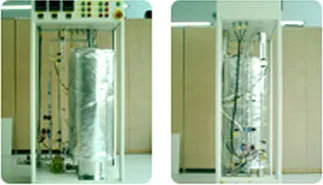
The SDHS-060 is the larger of the two hot DI generator models shown on the English pages of semian.net. Semian publish a capacity of max 60 liter/min for it. Nothing else about the model is stated on the English site, and it has no page of its own.
Published model details
| Parameter | Value |
|---|---|
| Published maximum capacity | 60 L/min |
| Application | Hot deionised-water generation |
Capacity from Semian’s explicitly named model listing. Outlet temperature, inlet water quality, pressure and utilities are project-selection questions; they are not established by this maximum-flow figure. Checked 2026-09-29.
Confirm your configuration
Share the details you know so we can prepare a comparable, itemised offer.
- Process gases and maximum flow, including chemical compatibility
- Required abatement method, exhaust and process-tool interfaces
- Utilities, waste handling, installation and maintenance requirements
Get a Quote
Request an itemised quotation covering the proposed configuration, availability, lead time and agreed supply and support scope.
Useful details to share
- Materials, sample dimensions and process or measurement goal
- Required performance and existing instrument interfaces
Share what you know. You can start with your name and a phone number or email; final specifications can follow.
Not sure which configuration you need? Help me choose
Contact Vvon Technologies Limited about Semian equipment requirements in Bangladesh.
Phone: +8801805987890 | Email: info@vvon.com.bd
More from Cleanroom Gas Safety & Generation
- Midas® Sensor Cartridge
Honeywell list the Midas sensor cartridge under air quality sensors in their building automation catalogue. The page carries a single technical statement, that each Midas sensor is potentially cross sensitive to other gases, which may cause a gas reading when the sensor is exposed to gases other than the one it was designated for. Certifications are the only other data published, and no gas list, range, lifetime or part number is given. The page shows no product photograph.
- SDHS-010 Hot DI Generator
The SDHS-010 is the smaller of the two hot DI generator models Semian show on the English pages of semian.net. The only figure Semian publish for it is a capacity of max 10 liter/min. No further description, utility requirement or dimension is given on the English site, and the model has no page of its own.
- ENVIRO-MATRIX Trinity
Point of use abatement system for PFC, SiF4 and acid gases from etch and CVD tools. A first water scrubber removes acid gases, a catalytic reactor breaks down the PFCs, and a second water scrubber removes the HF produced.